Create the event
The organizer defines the event structure around which registration will be launched.
 evenda.
Available Language Versions
РусскийEnglishSrpskiDeutschTürkçeქართულიEspañolहिन्दीবাংলাPortuguêsTiếng ViệtFrançaisItaliano한국어العربيةBahasa Indonesia日本語中文አማርኛ (Amarəñña)অসমীয়া (Ôxômiya)Azərbaycan diliБългарски (Bǎlgarski)ČeštinaΕλληνικά (Elliniká)Eesti keelفارسی (Fārsī)Fulfuldeગુજરાતી (Gujarātī)HausaMagyarIgboBasa Jawaಕನ್ನಡ (Kannaḍa)Latviešu valodaMalagasyBahasa Melayuമലയാളം (Malayāḷam)मराठी (Marāṭhī)မြန်မာဘာသာ (Myanma Bhasa)नेपाली (Nepālī)NederlandsAfaan Oromooଓଡ଼ିଆ (Oṛiā)پښتو (Paṣ̌to)PolskiRomânăسنڌي (Sindhī)සිංහල (Siṁhala)SlovenčinaChiShonaBasa Sundaதமிழ் (Tamiḻ)Wikang Tagalogతెలుగు (Telugu)ภาษาไทย (Phasa Thai)اردو (Urdū)Oʻzbek tiliYorùbáVahcuenghHrvatskiDanishFinnishSwedishFeatures
Evenda.io helps organizers launch online event registration, collect attendee data, manage guest registration, and use a practical registration form as part of one workflow.
0% is Evenda's commission on ticket sales. Subscription charges and your payment provider's fees are separate.
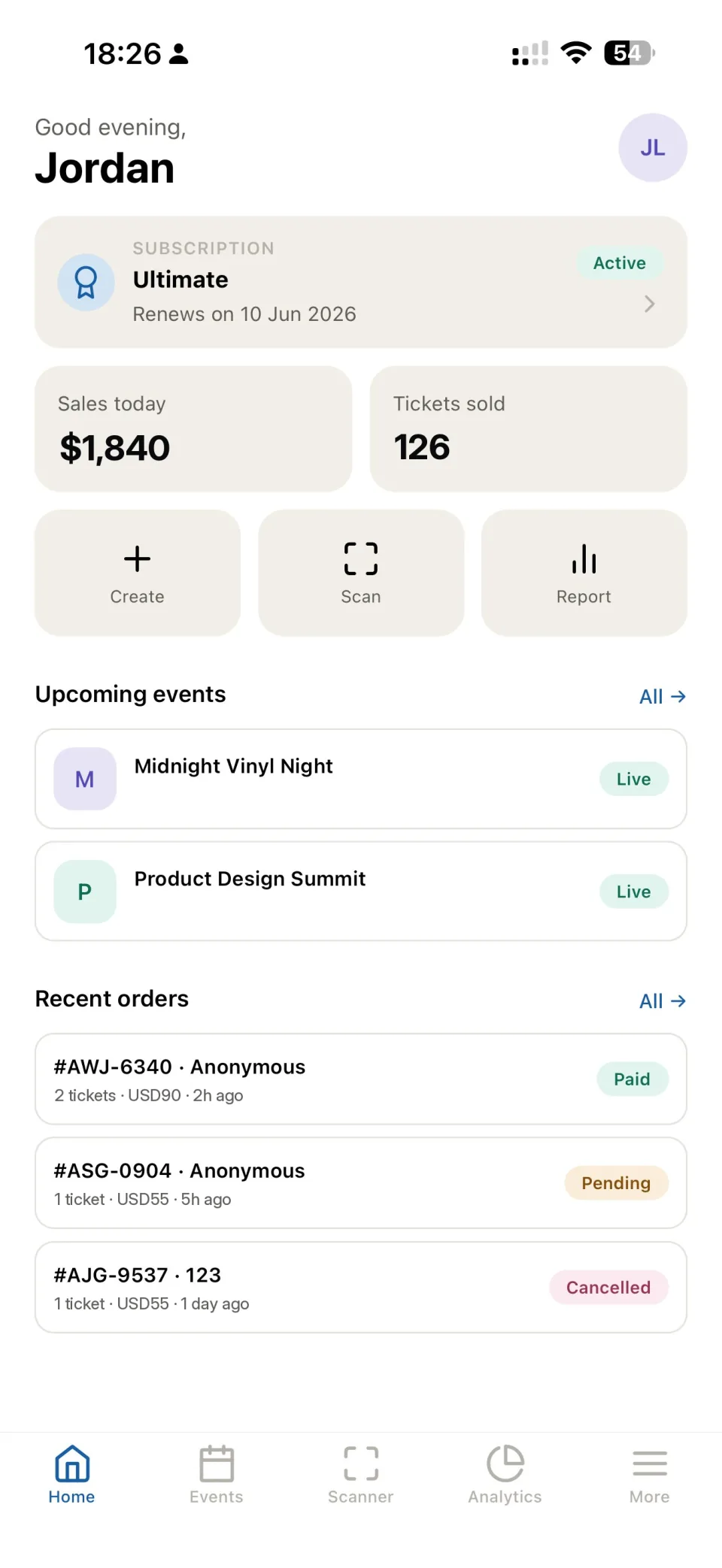
Evenda.io helps structure the flow from event creation to attendee collection.
The organizer defines the event structure around which registration will be launched.
The form can be configured for the specific use case and the data you want to collect.
You can use required and optional fields as well as additional questions when the event needs more attendee details.
The event can use free registration or, when relevant, combine registration with a paid participation flow.
After publishing, the organizer gets a ready-to-use registration page for campaigns, direct links, social media, and partner traffic.
From there, adjacent steps such as event pages, payments, QR access, or check-in can be connected without losing registration as its own scenario.
The key point is that registration is a standalone product scenario. Tickets, payments, and entry control may be next steps, but they do not replace attendee registration itself.
Evenda.io is especially helpful when registration should be part of a repeatable event workflow.
The organizer works with a more complete event registration flow rather than an isolated form.
Registered attendee information stays connected to the event instead of being spread across multiple tools.
There is less manual assembly around sign-up collection, link sharing, and registration follow-up.
The form works as part of the event flow and helps collect the exact data the organizer needs.
A repeatable structure is especially useful when you run a series of workshops, meetings, or recurring programs.
Guest and visitor registration feels easier to manage when the platform helps keep the process organized.
Evenda.io allows organizers to use event registration forms for both basic contact details and additional attendee information.
Different events may require contact details, comments, participant data, participation preferences, or other information that helps organize the process.
With Evenda.io, this data can be collected inside the registration flow itself instead of through a disconnected survey after registration.
This is especially useful when you need not only attendee registration, but also better participant data collection during sign-up or purchase.
It is a workflow where the organizer publishes a registration page, collects attendee data through an online form, and manages participants in a more structured format.
The usual flow includes creating the event, configuring the registration form, defining the fields, publishing the page, and collecting attendee registrations.
A regular form simply collects answers. An event registration form is more useful when it is connected to the event, the participants, and the organizer's follow-up process.
Yes. Evenda.io can be used for attendee registration, guest data collection, and more structured management of registered participants.
Yes. The platform can be used for free event registration when the organizer mainly needs a practical way to collect participants and keep attendee data organized.
This can include name, email, phone number, comment fields, and additional custom questions. Required and optional fields can also be used.
Registration focuses on collecting attendees and their data. Ticket sales are a related scenario tied to payment and access. The flows may overlap, but they are not the same.
Yes. Evenda.io is suitable for guest registration when you want to keep participant lists in one place instead of managing them manually.
Usually when a simple form no longer provides enough structure: there are more registrations, events repeat, and attendee data needs to be managed more systematically.
Yes. That is one of the key values here: Evenda.io helps keep visitor registration in one service and connect it directly to the event.
Get started
Start in your browser. No installation needed.